

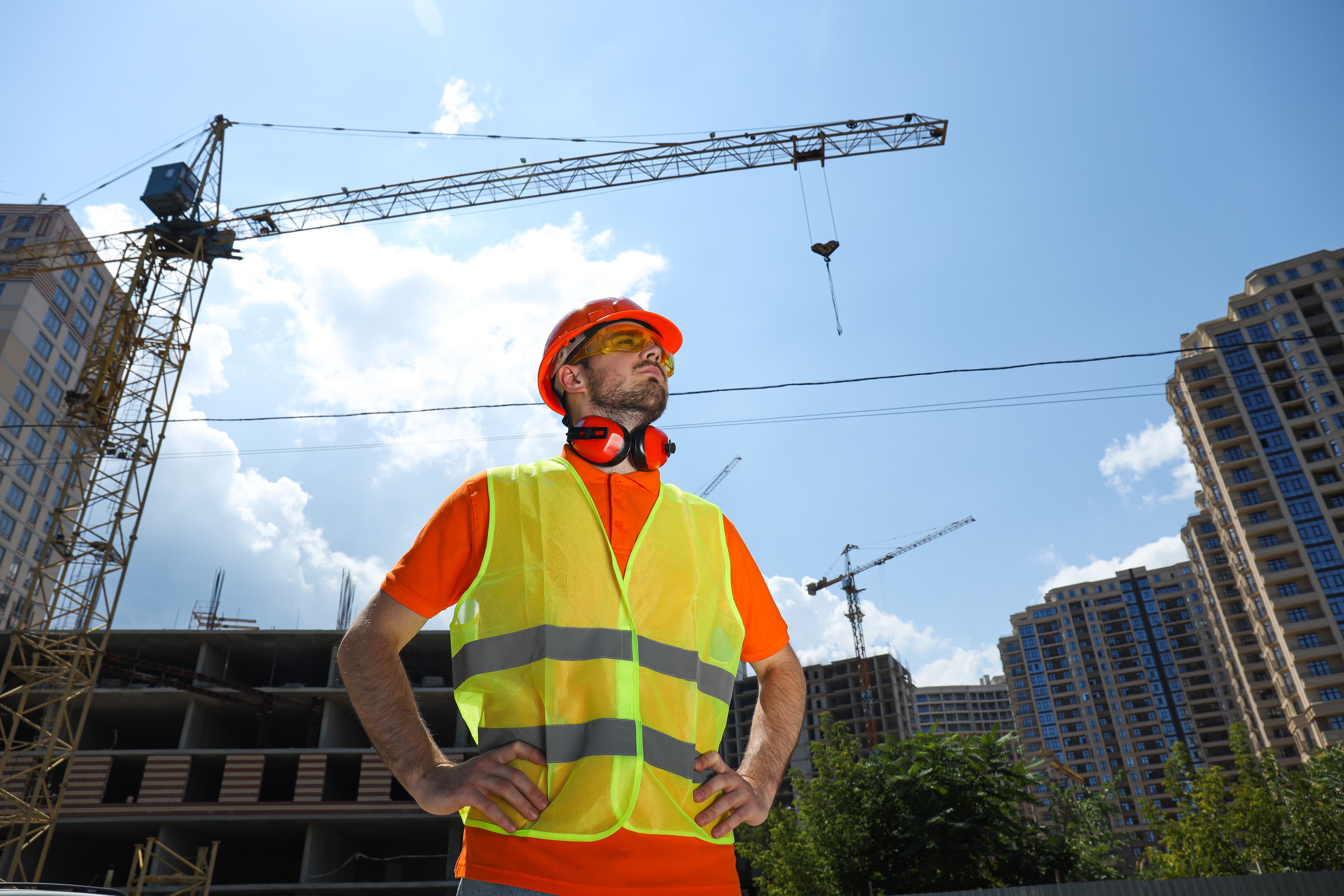
VR-Based Safety training for construction sites
Principal Investigator
Prof. Nikhil Bugalia
Objective
- Develop a high-quality, India-contextual Virtual Reality safety orientation module that simulates common site hazards, safe work practices, and emergency responses, Optimize the VR content for affordable, widely available headsets to maximize accessibility across small and large sites, Lead compressed 3D interactive model development through institute-affiliated startups to ensure realistic, low-bandwidth experiences suitable for field deployment, Provide domain inputs, scenario design, and validation through a full-time certified construction safety expert to ensure technical accuracy and regulatory alignment, Incorporate multilingual narration, culturally appropriate visuals, and low-literacy interaction design to reach diverse worker populations, Conduct a randomized field trial comparing the VR module's effectiveness against traditional Safety Park orientation on knowledge retention, observed safe behaviors, and incident rates, Refine successful modules for scalability, translate them into major Indian languages, and package them with deployment guides for contractors and NGOs
Description
- Safety on Indian construction sites is a critical challenge, with roughly 56 million workers in the sector unskilled and lacking essential hazard awareness. This project develops an India-contextual Virtual Reality safety orientation module simulating common site hazards, safe work practices and emergency responses, optimized for affordable headsets so that small and informal sites unable to afford physical Safety Parks can use it. Deliverables include validated VR training content, field trial results and deployment toolkits.
Impact
- Improved construction safety outcomes nationwide through a pathway for large-scale adoption, Deliverables including validated VR training content, evaluation results, and deployment toolkits, Safety orientation made accessible to small and informal sites that cannot afford dedicated physical Safety Parks, Improved hazard awareness across a sector in which roughly 56 million workers are unskilled and lack essential hazard awareness, Evidence on knowledge retention, observed safe behaviors, and incident rates generated through a randomized field trial against traditional Safety Park orientation, Modules translated into major Indian languages and packaged with deployment guides for contractors and NGOs