

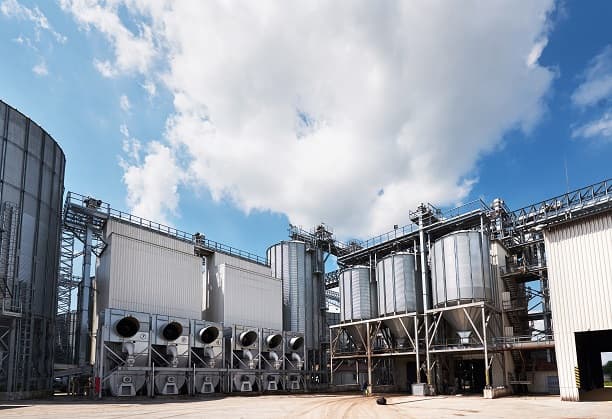
CO2 conversion process for decarbonization of cement manufacturing
Principal Investigator
Prof. Aravind Kumar Chandiran
Co-Investigator
Prof. Satyanarayana Seshadri, Prof. Rajnish Kumar
Objective
- To address the CO2 emission from cement manufacturing, To convert it into a value added chemical (syn-gas) using electrolysis approach, Re-use it in the same manufacturing process, Evaluate CO2 compression and reuse.
Description
- Cement manufacturing contributes to 8% of India's CO2 emission, CCUS is a crucial solution for the cement sector where a large share of emissions are not energy related but due to the specific chemistry of cement making, The solution to this problem is as follows: Decomposition of the Calcium Carbonate chemical reaction produces CO2 emission as a by-product, This CO2 is sent to the electrolyser to generate CO, where it is mixed with appropriate proportion of green hydrogen from water electrolysis (solar powered/green hydrogen) to generate Synthetic gas/Syn-gas (CO+H2 mixture), The heat generated from the combustion of Syn-gas is used to pre-heat the calcium carbonate, Cool, filter and compress pure CO2 for further use in other industrial processes.
Impact
- Fabrication and operation of a bench scale CaCO3 calciner of capacity 10 kg/hr, Optimization of calcination pathways to ensure no separation of flue gasses are involved in the process, Fabrication of 100 cm2 carbon dioxide electrolyzer cell to produce pure CO.