

Release of ANCHOR: World’s Most Detailed 3D Atlas of the Human Brainstem
The Sudha Gopalakrishnan Brain Centre at IIT Madras is a state-of-the-art research facility dedicated to mapping the human brain at unprecedented cellular resolution. Launched in 2022, it is among the very few centres globally – and the first in India – capable of imaging entire human brains at this scale, converting each brain into thousands of ultra-thin slices and petabyte-scale digital volumes. With over 100 human brains already digitized and mapped across different ages and neurological conditions, the Centre is building an open-source platform of human brain data that will serve as a global reference resource, comparable in impact to the Human Genome Project in genetics.

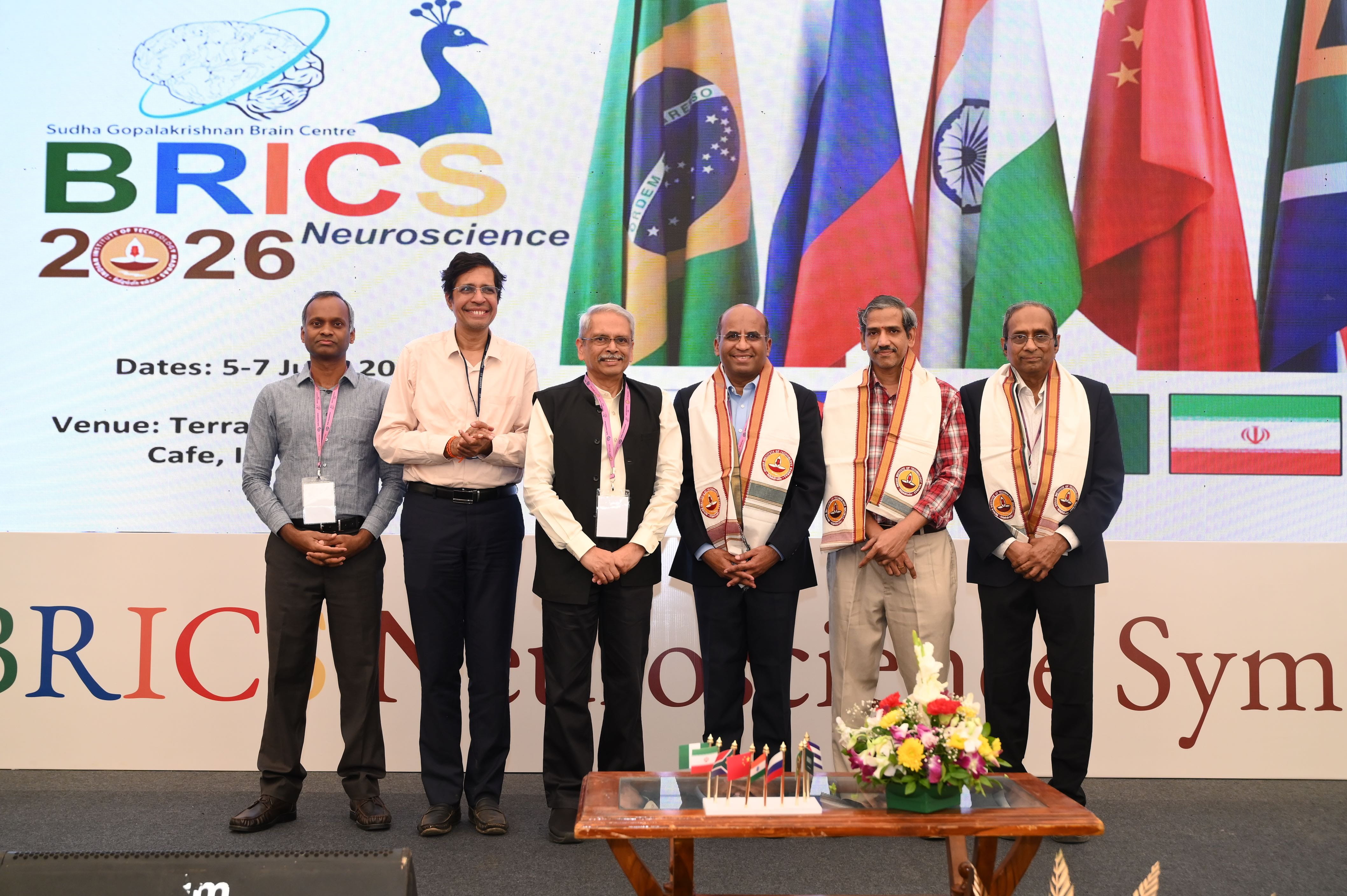
The Indian Institute of Technology Madras (IIT Madras) and the Sudha Gopalakrishnan Brain Centre (SGBC) have released ANCHOR, the world’s most detailed three-dimensional atlas of the human brainstem at cellular resolution. Developed through a convergence of engineering, neuroscience, and medicine, ANCHOR (Atlas of Neurochemical Characterization of the human brainstem with 3D Reconstruction) is a major milestone in India’s efforts to build next-generation brain maps that can power advances in diagnosis, treatment, and neurotechnology. The release of ANCHOR took place in the presence of Prof. Ajay Kumar Sood, Principal Scientific Adviser to the Government of India, Prof. V. Kamakoti, Director, IITM, Shri Kris Gopalakrishnan, IIT Madras Distinguished Alumnus and Co‑founder of Infosys, BRICS Neuroscience Symposium delegates, and leading faculty and clinicians associated with the Sudha Gopalakrishnan Brain Centre.

Release of ANCHOR (Atlas of Neurochemical Characterization of the human brainstem with 3D Reconstruction)
Presenting the scientific underpinnings of ANCHOR, Prof. Mohanasankar Sivaprakasam, Head, Sudha Gopalakrishnan Brain Centre, explained that the key enabling technology is SGBC’s multimodal image visualisation framework, which aligns macro-scale volumetric data with micro-scale cellular images. By establishing precise spatial correspondence between MRI and high-resolution cellular data, the platform allows users to move seamlessly from gross brain structures to cellular-level features, greatly enhancing the usability of the atlas for both basic neuroscience and neuromedicine. He described ANCHOR as an important milestone in SGBC’s broader mission to image over 100 whole human brains across the lifespan and in various neurological diseases.

Addressing the gathering, Prof. Ajay Kumar Sood, Principal Scientific Adviser to the Government of India, highlighted the national importance of building such high-resolution human brain atlases from India and emphasized the potential of this effort to catalyse new frontiers in brain science, technology and healthcare. He noted that initiatives like ANCHOR exemplify how investments in advanced research infrastructure and interdisciplinary collaboration can position India as a global leader in complex scientific domains.

Independent global experts participating in the BRICS Neuroscience Symposium underlined the international significance of this achievement. Prof. Shubha Tole, Distinguished Professor at TIFR and President of the International Brain Research Organization, observed that the programme is placing India “at the seat of the international table” in human brain research and praised the seamless convergence of engineering, neuroscience and medicine at SGBC. Joining virtually, Prof. Mu-Ming Poo, Scientific Director at the Institute of Neuroscience, Chinese Academy of Sciences, called the decision to begin with the brainstem a “wise choice,” noting its central role in connecting the brain and spinal cord and in controlling vital functions like movement, sleep–wake cycles and breathing. He lauded the “perfect marriage” of basic, clinical and engineering expertise that made ANCHOR possible and expressed confidence that more pioneering work would emerge from the platform.
Against the backdrop of the BRICS Neuroscience Symposium, the release of ANCHOR showcased IIT Madras and SGBC as a global hub for large-scale, collaborative human brain mapping that blends cutting-edge imaging, computation and international partnership. With ANCHOR now openly available, the organisers emphasized that this marks not an end point but the beginning of a longer journey towards comprehensive, cell-resolution maps of the human brain across ages and diseases, with direct implications for future diagnostics and therapies.